Skip to content

Clear communicationFree inspections

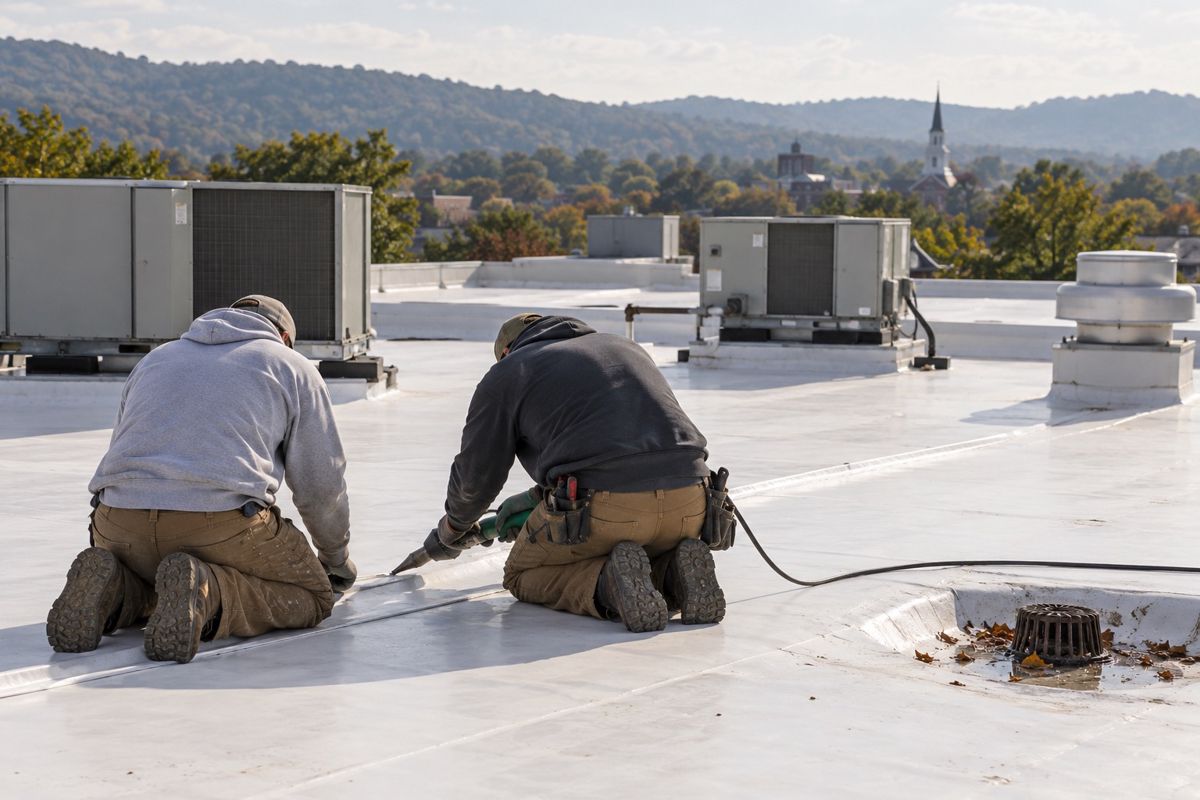
Roofers welding a seam on a flat white commercial roof

Commercial roofing in Clemson, SC

Commercial roofing in Clemson for owners and managers

Flat and low-slope roof repair, replacement and maintenance for small commercial and multi-family buildings.

  • Flat, low-slope and metal roofs
  • Repairs and replacements planned around your business
  • Clear written scope for owners and managers

Step 1 of 3

What do you need?

What kinds of commercial roofs are there around Clemson?

Commercial roofing Clemson owners deal with covers more than one roof type. Around town you will see shops and offices along the main corridors, restaurants, churches, small retail centers, apartment buildings and storage facilities. Their roofs usually fall into a few groups.

  • Single-ply membranes such as TPO and EPDM, common on flat and low-slope roofs.
  • Modified bitumen and built-up roofs, layered systems found on older flat buildings.
  • Metal roofs, either standing seam panels or exposed-fastener panels, often on light commercial buildings.
  • Shingle roofs on apartment buildings and small office properties with a pitch.

Each system has different weak points, so the first step is knowing what you have and how old it is.

What are the common problems with commercial roofs here?

Flat and low-slope roofs fail differently from pitched ones. Water has nowhere to run, so any low spot becomes a pond. Hot, humid summers and strong sun age membranes, and heavy thunderstorms test every seam.

  • Ponding water that sits for days after rain.
  • Open seams and punctures in membranes, often near rooftop equipment.
  • Failed flashing at walls, curbs and parapets.
  • Clogged drains and scuppers choked with leaves, pine needles and debris.
  • Blistering or cracking from heat and age.
  • Damage from other trades walking on the roof to service HVAC units.

Small leaks over a store or an apartment unit turn into tenant complaints quickly. Catch them early.

Should you repair, coat or replace a commercial roof?

It depends on the condition of the roof and the plans for the building. If a roof is mostly sound with a few problem spots, targeted repair is usually the sensible choice. If it is aging but the insulation is still dry, a restoration or coating may be an option on some systems. If the insulation is wet, the roof is failing across large areas or repairs keep recurring, replacement can cost less over the long run.

A roof inspection with photos and, where appropriate, moisture checks helps with that decision. See our roof inspection page for what is covered. For a smaller building with a pitched roof, the work looks closer to a roof replacement on a house. Ask for each option to be priced in writing.

There are no flat rates for commercial work. The main factors are:

  • Roof area and shape, including how many penetrations and curbs there are.
  • The system chosen and its thickness and warranty options.
  • Whether old layers must be torn off or a new system can go over a sound one, if the code allows.
  • Condition of the insulation and deck beneath.
  • Access for crews, material handling and any need for a crane or lift.
  • Working around tenants, customers and business hours.

Permits and code requirements for commercial work are usually stricter than for homes, so confirm who handles them. Make sure any contractor can show current license and insurance, which is standard to request for commercial jobs.

How long does a commercial roof job take and what should you expect?

Small repairs may take a day. Full replacements on small buildings can take from several days to a few weeks, depending on size, weather and the system. Rain delays are normal. A good plan covers how the building will stay protected each night, how deliveries and debris are handled, and how entrances stay safe.

For multi-family and retail buildings, advance notice to tenants helps. Noise, parking limits and rooftop access are the usual concerns. Ask for a written schedule and a single point of contact. If your property also needs routine upkeep, consider a regular roof check twice a year and after major storms. For damage after a storm, visit our storm damage page. You can also return to the home page.

What you can expect

  • Clear communication

  • Free inspections

  • Written estimates

  • Local crew

Questions about roofing in Clemson

What is the difference between TPO and EPDM?

Both are single-ply membranes used on flat and low-slope roofs. TPO is typically white and reflective, with heat-welded seams. EPDM is a black rubber membrane, often glued or mechanically attached. Each has strengths, and the best choice depends on the building, budget and roof traffic. Ask a roofer to explain the trade-offs for your property.

How often should a commercial roof be inspected?

Many owners schedule a check once or twice a year, plus after a major storm. Regular inspection finds small problems such as open seams, clogged drains and flashing wear before they turn into leaks. Keeping records of inspections and repairs also helps if you ever file an insurance claim or sell the property.

Can a commercial roof be coated instead of replaced?

Sometimes. Coatings can extend the life of certain roofs that are still dry underneath. They are not suitable for roofs with wet insulation or widespread failure. A moisture check and a close look at seams and flashing help decide. Be wary of anyone who recommends a coating without inspecting the roof properly.

Who is responsible for the roof on a leased building?

It depends on the lease. Some leases place roof repair on the owner, others pass costs to the tenant. Read your lease or ask your property manager. If you are an owner, clear terms for roof repairs and access save disputes later.

Will work on the roof disrupt my business?

There will be some noise and activity, but planning can limit it. Ask the contractor about work hours, parking, dumpster location and protection for entrances. Roof work on multi-family buildings should include notice to residents. Interior disruption is usually small unless the deck or ceilings need repair.

Do you need a permit for commercial roofing?

In most cases, yes, though requirements depend on the jurisdiction and the type of work. Commercial roofs often have energy, fire and wind requirements. Ask the contractor who pulls the permit and how inspections are scheduled. You can also check directly with the local building department.

How it works

  1. Call or request a quote

    Tell us what is happening with the roof.

  2. Free inspection

    A roofer checks the roof and gives a written price.

  3. Work done right

    Clean crew, nail sweep, warranty in writing.

Request commercial roofing

Tell us what you need and we call you back.

No obligation.

Step 1 of 3

What do you need?

Ready when you are Call now or request a quote online. Call for a free inspection Get my free quote (864) 555-0166